The line in your driveway
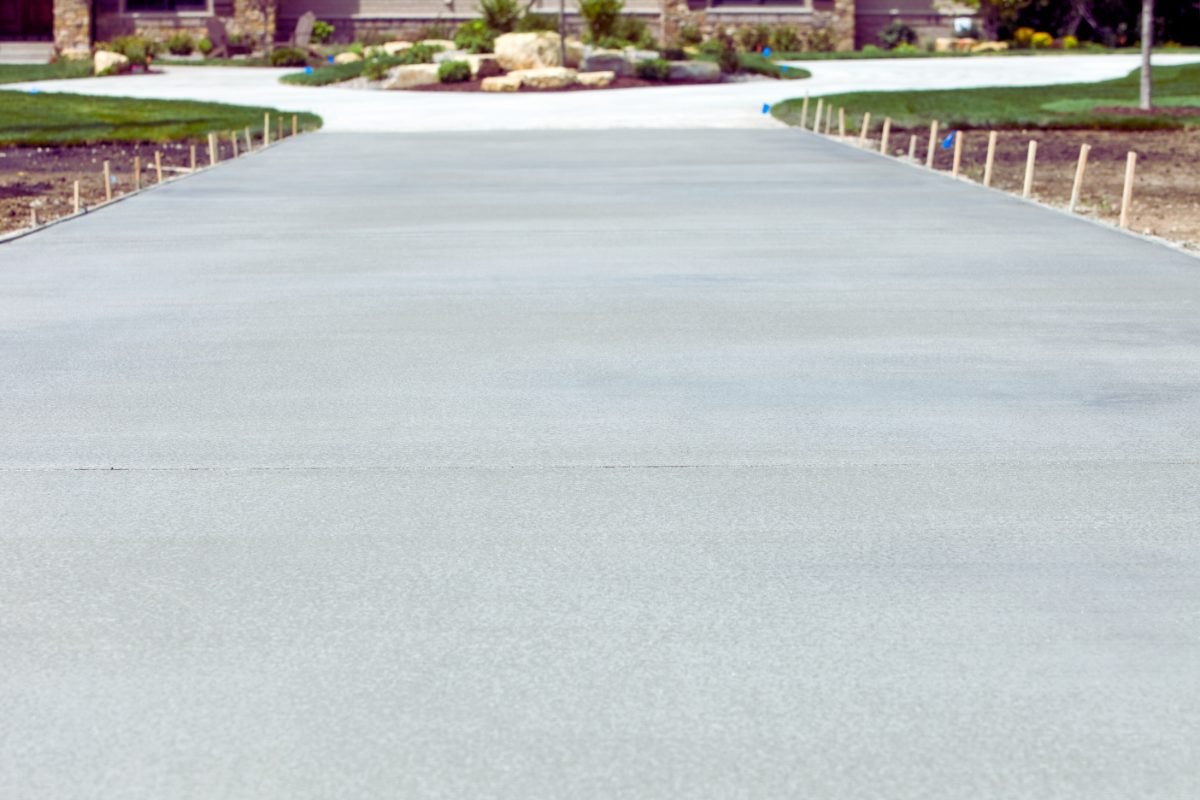
Stand at the garage and look down the driveway to the street. Somewhere near the front fence there is a line you cannot see. On the house side of it the concrete is on your land. On the street side, across the nature strip to the kerb, it is on the road reserve, which council looks after even though you pay for the slab and you sweep it.
Section 138 of the Roads Act 1993 says that work on a public road, and the road includes the verge and the kerb, needs the consent of the roads authority. On a normal suburban street around Maitland, Cessnock or Raymond Terrace that authority is the council. On a classified road such as the New England Highway, Transport for NSW has to agree as well.
That consent is what people mean by Section 138 approval. It is council’s written permission to build, widen, move, replace or remove the crossing, meaning the layback in the kerb and the slab across the verge. It is not a development application. It is not part of a complying development certificate. Maitland City Council’s own information kit says development consent for building work does not cover it, and Port Stephens Council says a DA covers only the part inside your property.
When you need it
Any time the work touches the road reserve:
- a first driveway on a new lot in Thornton, Chisholm, Huntlee or Medowie
- widening a crossing so two cars fit, or adding a second one where council allows it
- replacing a cracked or sunken crossing, even like for like
- moving a driveway, which also means taking out the old layback and reinstating kerb and grass
- repairing or restoring a disused crossing, which Maitland and Cessnock both list as needing consent
You do not need it for concrete that stays inside your boundary. A shed slab at the back, a path down the side, a patio, or a driveway widening that flares out behind the existing crossing without touching the verge is your own business, subject to whatever else applies to your lot.
Want the crossing and the driveway priced together? Send the job and the suburb and a local concreter will measure it and quote in writing, stating who prepares and lodges the council application.
Where the application goes, council by council
This is where the three councils part ways, and where most of the wrong advice online comes from. The NSW Planning Portal publishes a list of the councils that accept Section 138 applications through the portal. On 29 September 2026 Cessnock City Council was on that list. Maitland City Council and Port Stephens Council were not. Sending a Maitland or Port Stephens driveway to the portal sends it nowhere.
Maitland City Council
Council calls it the Application for Vehicle Access Crossing (Driveway). You lodge it one of two ways: online through MyCouncil, which needs a MyCouncil login, or by downloading the PDF form and emailing it with a site plan to council, or handing it in at the administration centre. Council asks you to read its driveway FAQ and information kit first.
The published fee is $435 for a new driveway, a widening or an additional driveway, and council says a straightforward application is usually processed within 14 to 21 working days. Where the driveway is steep, has more than one level or may be affected by future road work, council asks for 28 working days and may require a site-specific design by a suitably qualified person at the applicant’s cost. Approval arrives as a letter to hand to your contractor.
Nothing starts until that letter exists. The concreter then builds the formwork and books the formwork inspection by phoning council no later than the business day before. Inspections run on weekdays between 6:30 am and 4:00 pm, and council does not promise a time. A second pre-pour inspection is charged at $170. If the work also cuts into the road, footpath, kerb or gutter, a separate Road and Footpath Opening Permit is needed and council says both approvals are often required.
Cessnock City Council
Council calls the work a Vehicle Access Crossing and takes the application only through the NSW Planning Portal. In the portal you start a new application from the Roads Act item and choose the Section 138 works and structures approval type. The case number begins with RA. Once the portal accepts the application as complete, council’s customer service team contacts you for payment, and it is not treated as lodged until the fees are paid.
Council publishes a submission matrix for exactly this. For a driveway the required attachments are the estimated cost of works, a driveway plan, a site plan and a section plan. The driveway plan has to show the material, its thickness, strength, reinforcement and cover, the profile with crossfalls, the width at the boundary and the distance to the nearest side boundary. Photographs of the existing kerb and footpath, a risk assessment, a safe work method statement and the contractor’s insurance are on the upload checklist too. This is a concreter’s document set, not an owner’s, so ask early who is producing it.
Council’s fee schedule for 2026 to 2027 lists three items for an owner-built crossing: an application processing fee of $244, an assessment fee of $62 and an inspections fee of $491.10, with a re-inspection at $220. Council says it aims to approve applications within 10 working days once everything is in, and that an approval is valid for 24 months. Two inspections are booked by phone: one before the pour, and a final one when the site has been tidied, after which council issues a compliance certificate. The older information kit asks for 48 hours notice for inspections.
Port Stephens Council
Council uses its own online Driveway Application Form, reached from the driveway construction page on council’s website. It covers building, rebuilding or removing a driveway, and the residential fee of $320 per crossing is paid as the form is submitted. The form asks which type of driveway it is, whether it is the primary or a secondary driveway, whether it is within 5 metres of a street tree, and whether it affects street furniture or drains.
After lodgement a council officer visits the property. Council’s driveway page says a straightforward approval usually takes two working days, while the form allows a site inspection within seven business days and an approval within twelve business days of lodgement, so plan around the longer figure. The approval comes with the standard drawings and any specific requirements council wants for your crossing, which matters because council’s public standard drawings page lists driveways as coming soon. Once approved, and once you have supplied public liability insurance to council, construction can start. When it is finished you ring council for a final inspection and council confirms whether it meets the standard.
What the crossing has to be built to
Each council specifies the strip it owns. Where a figure is not published, the table says so rather than guessing.
| Maitland City Council | Cessnock City Council | Port Stephens Council | |
|---|---|---|---|
| Drawing | SD007 to SD012 (2019 revisions, in the 2026 manual) | SD-RD-008 and SD-FC-004B (July 2024 set) | Issued with the approval; public page says coming soon |
| Thickness | 125 mm residential | 125 mm residential | Not published |
| Concrete | 32 MPa | N32 | Not published |
| Steel | SL72 placed centrally | SL82 placed centrally | Not published |
| Base | Sand bedding over compacted subgrade | Minimum 150 mm DGS20 | Not published |
| Width at kerb | 2.7 m to 6 m plus 600 mm wings; 3 m single garage, up to 4.5 m double | 3 m to 5.5 m plus 750 mm splays (web page says 5 m) | Form caps 3 m single garage, 4 m double |
| Clearances | 600 mm to poles, 2 m to street trees, 0.9 m from the side boundary | 1 m to poles, pits, signs and trees; 6 m from a corner tangent point | 0.5 m from the side boundary; clear of services and trees |
| Grade across the verge | 4 percent where there is no footpath, 2.5 percent over a footpath | About 12 percent behind the kerb, then 2 to 2.5 percent over the footpath strip | To Australian Standard 2890 |
| Joints | Full depth expansion joint at the boundary; layback dowelled to the kerb | Expansion joints both sides of the crossing on the footpath drawing | Not published |
| Finish | Kerb, gutter and layback plain; special surface permitted if not slippery | Plain uncoloured reinforced concrete, non-slip | Any non-slip finish, including some aggregate |
Two things stand out. First, all three councils treat the footway crossing as heavier than the driveway inside your lot: 125 mm where they publish it, in stronger concrete than most residential slabs. Second, the strip has to keep the footpath usable, which is why the crossfall over it is limited to a few percent and why Maitland says an existing concrete footpath is not to be removed. The specification on this site sets out what belongs under the rest of the driveway.
Who prepares and lodges
All three councils put the responsibility on the owner. Maitland says the owner is responsible for the cost and standard of the work and recommends the contractor be adequately insured and appropriately licensed. Cessnock tells owners to make sure the contractor is licensed and insured. Port Stephens asks for public liability insurance before construction.
In practice the concreter usually draws the site plan and profile because the council wants levels, widths and offsets that only someone who has measured the block can supply, and in Cessnock the portal upload is a full construction document set. Who actually presses lodge, who pays the council fee and who books the inspections varies from job to job. The quote should say. Do not assume the approval is part of the price or that it has been arranged unless the written quote states it in those words. This site refers enquiries to an independent concreter and cannot lodge for you.
Mistakes that cost weeks
- Pouring first. Every council can require unapproved work to be removed or rebuilt at the owner’s cost, and Maitland cites Section 218 of the Roads Act for recovering that cost.
- Lodging on the portal in Maitland or Port Stephens. It is not their door. Use MyCouncil or the email form in Maitland and council’s own forms site in Port Stephens.
- Painting or colouring the kerb to match the driveway. Maitland’s form says removing or painting the kerb and gutter for colour matching is not permitted.
- Ignoring the pit or the tree. Maitland wants 600 mm clear of a stormwater pit and 2 m from a street tree trunk; Cessnock wants 1 m from both. Moving a pit is at the owner’s expense and only council may move a street tree.
- Forgetting the road on the low side. Maitland’s technical document warns that a driveway on the low side of the road can let gutter water into the site, and asks for a grated drain at the low point.
Sources checked
Maitland City Council’s home improvements and building page, its Application for Vehicle Access Crossing 2026 form, the Vehicle Access Crossing FAQ and Information Kit, the Manual of Engineering Standards 2026 driveway technical document and standard drawings, and the 2026 to 2027 fees and charges. Cessnock City Council’s Driveways page, its Formal Lodgement for Roads Act Approvals page, the Section 138 submission matrix, the July 2024 driveway standard drawings and the 2026 to 2027 fees and charges. Port Stephens Council’s driveway construction page, its Driveway Application Form, its works in the road reserve page, the Development Control Plan 2025 and its online fees portal. The NSW Planning Portal’s Section 138 approvals page for the list of participating councils. All read on 29 September 2026. Councils change fees each July and can change drawings at any time, so confirm with the council before relying on a figure here.